How Much Does a Trip to China Cost? 2026 Budget Guide
Maintained by Lin · Prices checked in Dongguan and in the 12306 and Ctrip apps, October 23–25, 2026 · Ticket and metro prices from official sources
Quick answer
Plan on ¥350–650 a day on a budget, ¥800–1,500 mid-range and ¥1,800–3,000+ for a comfortable trip, per person, before international flights. At October 2026 exchange rates (US$1 ≈ ¥6.7), that's about US$50–100, US$120–220 and US$270–450+ a day.
These are my planning ranges, not official averages. Here's what things cost when I checked in October 2026:
Metro: ¥3–6 for rides up to 32 km in Beijing (official fares).
Ride-hailing: DiDi quoted me ¥10 for a 3.1 km Economy ride in Dongguan; a taxi was estimated at ¥14.1.
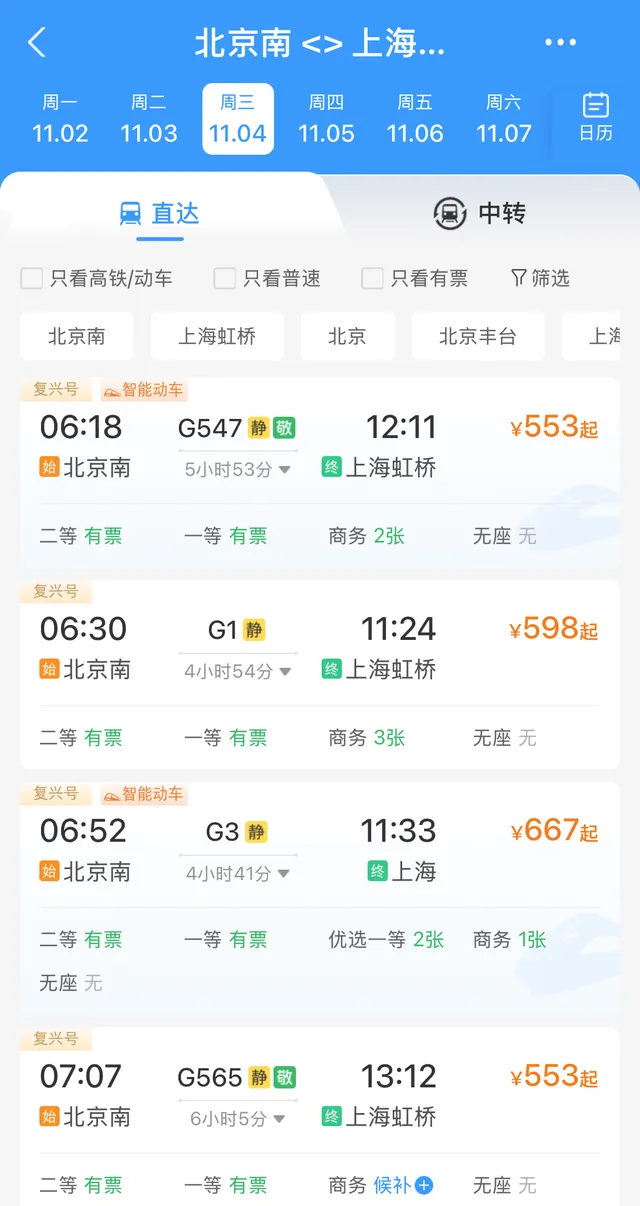
High-speed train: Beijing to Shanghai in second class was ¥553–667 on 12306 for November 4.
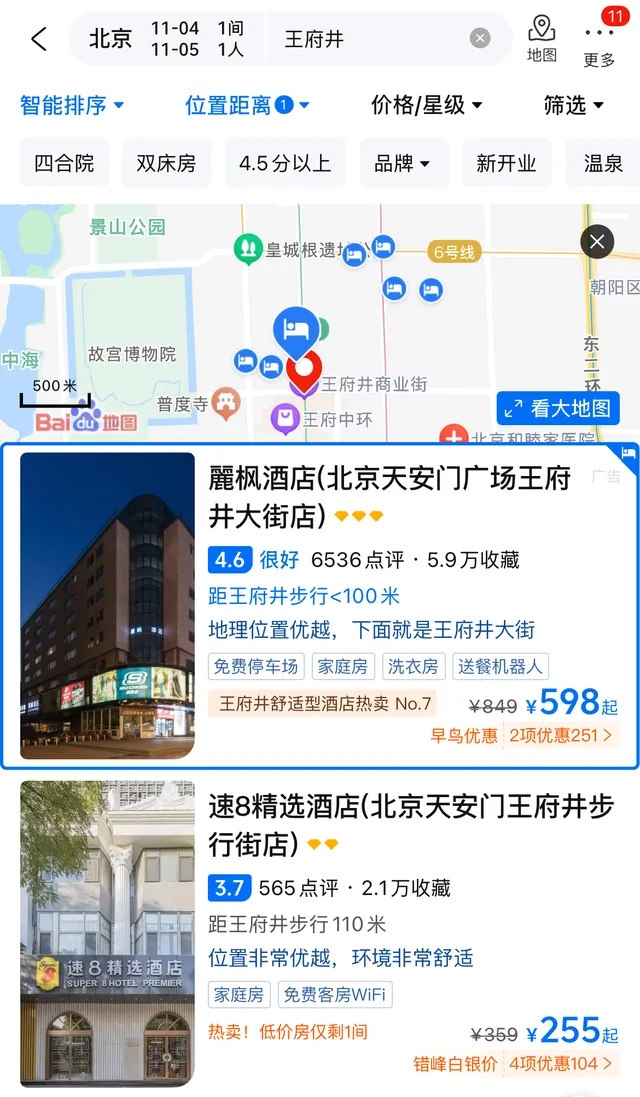
Hotels near Wangfujing, Beijing, for November 4: ¥255 at a budget chain and ¥598 at a mid-range chain, both on Wangfujing. The cheapest I saw were ¥59–71, 2–3.4 km away.
Food in Dongguan: breakfast about ¥10, coffee ¥10–20, a bottle of water ¥2.
Big sights: Forbidden City ¥40 (November–March) or ¥60 (April–October); Terracotta Army ¥120.
Card fees: with a foreign card in Alipay or Weixin Pay, payments up to ¥200 are generally free; above that, 3% may apply.
China trip cost calculator: 7, 10 and 14-day estimates
Choose your travel days, number of travelers and travel style. Compare the daily-spending subtotal per person with the subtotal for your whole group.
Use the interactive calculator to change days, travelers and style. The examples below are a planning reference.
Mid-range: RMB 800–1,500 per person per day
Per person for 10 days: RMB 8,000–15,000
All 1 traveler for 10 days: RMB 8,000–15,000
Daily-cost subtotals. Add separate trip costs below.
Uses this guide's existing ChinaEase planning ranges for accommodation, meals, local transport, ordinary attractions and small daily expenses. These are estimates, not live prices or official averages.
Add intercity trains or domestic flights, international flights, insurance, visa costs where applicable, shopping, fees and a contingency separately. Daily-cost subtotals differ from the full-trip envelopes further down, which include a broad intercity allowance.
The group estimate applies the same per-person range to every traveler. It does not calculate a shared-room discount or child price. Replace assumptions with actual room and ticket quotes before booking.
7, 10 and 14-day daily-spending examples
Each cell is for one person over the full number of days shown, excluding the separate costs listed above. The comfortable range has an open upper end.
Days / one person
Budget
Mid-range
Comfortable
7 days
RMB 2,450–4,550
RMB 5,600–10,500
RMB 12,600–21,000+
10 days
RMB 3,500–6,500
RMB 8,000–15,000
RMB 18,000–30,000+
14 days
RMB 4,900–9,100
RMB 11,200–21,000
RMB 25,200–42,000+
Real prices I checked in October 2026
I'm based in Dongguan, a big city between Guangzhou and Shenzhen. Below is what I usually pay there, plus prices I looked up in apps on October 23–25, 2026. Train and hotel prices are for Wednesday, November 4, 2026. Apps change prices with the date and demand, so treat these as examples, not quotes.
Everyday spending in Dongguan (what I usually pay)
What
Price
Breakfast
about ¥10
Coffee
¥10–20
Bottle of water
¥2
Snack
a few yuan
Fruit, one purchase
¥20–30
A pen, paid with TenPayGo and a UK Mastercard
¥4.90, no card fee
Rides in Dongguan (quoted in the apps; I didn't book)
Trip
Cheapest app ride
Taxi
3.1 km (DiDi, October 24)
¥10
about ¥14.1
14 km, 32 min (Amap, October 23)
¥19–23
about ¥49
25 km, 56 min (Amap, October 23)
¥34–38
about ¥96
High-speed trains (12306, second class, November 4)
Route
Second class
Journey time
Beijing South → Shanghai
¥553–667
4 h 41 min – 6 h 5 min
Beijing West → Xi'an North
¥494–587
4 h 10 min – 5 h 46 min
Guangzhou East → Shenzhen
¥72
1 h 27 min
Hotels (Ctrip, one room for one night, November 4)
Search
Top of the default list
Cheapest I saw
Near Wangfujing, Beijing
¥598 (Lavande) and ¥255 (Super 8 Hotel Premier), both on Wangfujing
¥59–71, 2–3.4 km away
Near East Nanjing Road, Shanghai
¥539 and ¥273, two Hanting hotels 1.4 km away
¥30–31 for a dorm bed, 2.3–4.9 km away
I searched in Ctrip, Trip.com's Chinese app. The prices include the discounts Ctrip showed my account, and Trip.com's English app may show different prices. The cheapest places came in well under the ranges further down this page, but they were 2–5 km from the center, and the cheapest Shanghai beds were rated 1.7–3.4 out of 5. If you book somewhere very cheap, read how hotel check-in works for foreigners first.
Screenshots from the 12306 and Ctrip apps (Chinese versions), October 25, 2026.
Daily China travel budget at a glance
Travel style
Planning range per person/day
Typical approach
Budget
RMB 350–650
Hostel or simple room, local meals, metro and bus, selective paid sights
Mid-range
RMB 800–1,500
Comfortable hotel, mixed dining, metro plus some DiDi, several paid sights
Comfortable
RMB 1,800–3,000+
Higher-grade hotel, frequent taxis, premium meals, tours or shows
Use these figures as a first planning envelope, not a quotation. Exact prices change by destination, date, room type, booking channel, and availability.
Daily ranges exclude international flights and major intercity transport. The longer-trip examples below add a broad domestic transport allowance.
Solo travelers usually pay the full hotel-room price. Two people sharing one room may have a lower per-person accommodation cost.
What the estimates include — and exclude
Included in the daily estimate: accommodation, ordinary meals, city transport, common attraction tickets, and a modest allowance for small travel expenses.
Excluded: flights to and from China, visas where required, travel insurance, shopping, nightlife, medical care, luxury experiences, private guides, and large exchange or card fees.
Intercity trains and flights aren't in the daily figures. See the train fares I checked and the trip totals below.
Prices are in Chinese yuan (RMB, ¥). On October 16, 2026, the official reference rate was ¥6.72 to the US dollar, ¥8.90 to the pound and ¥7.52 to the euro. Some guides still convert at ¥7 or more to the dollar, which makes China look a little cheaper in dollars than it is now. Check the live rate before you go.
Style
Per person per day
US$
£
€
Budget
¥350–650
50–100
40–70
50–90
Mid-range
¥800–1,500
120–220
90–170
110–200
Comfortable
¥1,800–3,000+
270–450+
200–340+
240–400+
Accommodation: usually the biggest variable
Hostel bed or very basic room: plan around RMB 100–250 per night where available.
Simple chain hotel or typical three-star room: often budget around RMB 250–600 per room per night.
Comfortable four-star room: a useful planning range is RMB 600–1,200+ per room per night.
Luxury and landmark hotels can start above RMB 1,200 and rise far beyond it. Central business and tourist districts often cost more.
Compare the final price, taxes, breakfast, cancellation, deposit, and room type—not only the search result headline.
What I found for November 4, 2026: on Wangfujing in Beijing, ¥255 at a budget chain and ¥598 at a mid-range chain; in Shanghai, two Hanting hotels 1.4 km from East Nanjing Road at ¥273 and ¥539. All the prices
3-day Shenzhen itinerary: Futian, Shenzhen Bay, Nantou, food, hotels, Metro and airport transfers.
Food: inexpensive locally, but easy to scale up
Simple breakfast, bakery item, or snack: roughly RMB 10–30.
Local noodle, rice, dumpling, or canteen-style meal: roughly RMB 25–60 per person.
Casual sit-down restaurant: roughly RMB 60–150 per person before premium drinks or special dishes.
Hotpot, specialty restaurants, imported food, cocktails, and fine dining can reach RMB 120–300+ per person.
Check menu units, portion size, tea charges, service charges, and seafood prices before confirming.
What I usually pay in Dongguan: breakfast about ¥10, coffee ¥10–20, a bottle of water ¥2, fruit ¥20–30.
Local and intercity transport
Metro. Fares go by distance. In Beijing, a ride of up to 6 km costs ¥3, 6–12 km ¥4, 12–22 km ¥5 and 22–32 km ¥6, then ¥1 more for every extra 20 km. The Capital Airport Express is a flat ¥25. In Shanghai, it's ¥3 for the first 6 km, then ¥1 more for every 10 km. Shanghai held a hearing on raising metro fares in September 2026, so check before you go. In Beijing, Shanghai, Guangzhou and Shenzhen you can tap a contactless Visa or Mastercard at the gate. A metro-and-bus day comes to about ¥10–30.
Taxis and ride-hailing. In Dongguan, DiDi quoted me ¥10 for a 3.1 km Economy ride, against a taxi estimate of ¥14.1. On a 25 km trip, the cheapest ride in Amap was ¥34–38 and a taxi about ¥96. App rides show a fixed upfront fare; taxis show an estimate. How to use DiDi in English
High-speed trains. Long trips are the biggest transport cost. On 12306 for November 4, 2026, second class was ¥553–667 from Beijing to Shanghai, ¥494–587 from Beijing to Xi'an and ¥72 from Guangzhou East to Shenzhen (details). On the same route, faster trains cost more. Slow conventional trains are much cheaper but take far longer: K507 from Beijing West to Xi'an East was ¥152.5 for a hard seat, for a 15 h 48 min trip. How to book on 12306
Domestic flights. Domestic flights can beat rail on very long routes, but include airport transfers, baggage rules, check-in time, and disruption risk.
Attractions, mobile data, payment, and extras
Tickets. Many public spaces are free, and most big paid sights cost about ¥40–200. Official adult prices for some of the big ones:
Sight
Adult ticket
Good to know
Forbidden City (Palace Museum), Beijing
¥60 April–October, ¥40 November–March
Treasure Gallery and Hall of Clocks ¥10 each. Book online with your passport number
Mutianyu Great Wall, Beijing
¥45
The shuttle bus and the cable car or toboggan cost extra
National Museum of China, Beijing
Free
Book up to 7 days ahead; real-name entry, so bring your passport
Terracotta Army, Xi'an
¥120
Same price all year. Book on the official website or WeChat
Chengdu Panda Base
¥55
Free for children 6 and under or under 1.3 m
The Bund (Shanghai), West Lake (Hangzhou)
Free
Public waterfronts
Mobile data. Allow about ¥50–300 for an eSIM, roaming or a local SIM, depending on how long you stay and how much data you use. China eSIM & internet guide
Payment fees. With a foreign card in Alipay or Weixin Pay, payments of ¥200 or less generally have no fee. Above ¥200, a 3% fee may apply to the whole amount (Shanghai government, September 2026): on a ¥300 dinner, that's ¥9. When I paid ¥4.90 for a pen with TenPayGo, which runs on Weixin Pay, the ¥0.15 (3%) fee was crossed out. Your own bank may add a foreign transaction fee. Set up at least two ways to pay: see the payment guide for visitors.
Estimated total for 5, 10, or 14 days
Trip length
Budget
Mid-range
Comfortable
5 days
RMB 2,500–4,500
RMB 5,000–9,000
RMB 10,000–18,000+
10 days
RMB 4,500–8,000
RMB 9,000–18,000
RMB 20,000–36,000+
14 days
RMB 6,500–11,000
RMB 13,000–25,000
RMB 28,000–50,000+
The daily tables above leave out intercity travel; these totals add an allowance for it. For scale, one long high-speed trip, such as Beijing to Xi'an or Beijing to Shanghai, was ¥494–667 in second class when I checked 12306 for November 4.
These totals are planning envelopes for one person and include a broad allowance for domestic intercity travel. International flights remain excluded.
A fast multi-city route generally costs more than a slower stay in one or two places. A couple sharing rooms may spend less per person than two solo travelers.
Price hotels, long-distance transport, and must-see tickets first, then add a daily allowance for food, local transport, and flexible activities.
When and where China costs more
Chinese New Year, the Labor Day holiday, the National Day holiday, school holidays, major trade fairs, and peak summer dates can tighten availability and raise costs.
Central districts in Beijing, Shanghai, Shenzhen, Guangzhou, Hangzhou, and popular resort destinations usually need a higher hotel allowance.
Remote natural areas may have inexpensive rooms but costly transfers, guides, cable cars, or limited alternatives.
Book critical transport and accommodation earlier for peak dates, but compare cancellation rules before paying a non-refundable rate.
Reduce cost without weakening the trip
Choose fewer bases and stay longer in each city to reduce transfers and repeated one-night bookings.
Stay near a useful metro interchange rather than paying the highest premium for a famous landmark address.
Use public transport for predictable journeys, then reserve DiDi for luggage, late arrivals, or poorly connected places.
Mix free neighborhoods, parks, markets, and museums with a small number of paid priority sights.
Track spending in RMB every two or three days so a recurring overspend does not surprise you at the end.
Build your personal China budget
List the cities, nights, room arrangement, and travel dates. Mark any Chinese public holiday or major event.
Add live hotel prices and the exact 12306 or airline fares for every intercity leg.
Add must-see attraction prices from official booking channels and any private tour or performance.
Choose a realistic daily amount for meals and city transport based on your travel style.
Add mobile data, insurance, visa costs if applicable, payment fees, shopping, and a contingency of roughly 10–15 percent.
Keep international flights separate so you can compare the cost of the China portion clearly.
Budget mistakes to avoid
Treating a national daily average as a guaranteed price for a major city, remote scenic area, or public holiday.
Forgetting that a solo traveler pays for the whole room while a couple can split it.
Comparing a rail fare with a flight headline price without airport transfers, baggage, and time.
Using an old fixed USD conversion instead of the live rate and fees that apply to your payment method.
Relying on one wallet or card and leaving no contingency for rebooking, illness, weather, or lost items.
How can I calculate a China travel budget for two people?
Enter two travelers in the calculator. It multiplies the per-person range, so it doesn't count what you save by sharing a room. Hotel prices are per room, so two people sharing pay about half each for accommodation; meals, tickets and train seats are per person.
How much money do I need per day in China?
Plan on ¥350–650 per person a day on a budget, ¥800–1,500 mid-range and ¥1,800–3,000+ for comfortable travel, before international flights. At October 2026 rates, that's about US$50–100, US$120–220 and US$270–450+.
Is China cheap for tourists?
Day to day, yes. When I checked in October 2026, a Beijing metro ride cost ¥3–6, a 3 km DiDi ride in Dongguan was quoted at ¥10, and breakfast cost me about ¥10. The big costs are hotels in central Beijing and Shanghai, long train trips (Beijing to Shanghai was ¥553–667 in second class) and paid sights.
How much should I budget for 10 days in China?
About ¥4,500–8,000 per person on a budget, ¥9,000–18,000 mid-range and ¥20,000–36,000+ comfortable, including intercity trains but not international flights. At October 2026 rates, that's roughly US$670–1,190, US$1,340–2,680 and US$2,980–5,360+.
Are high-speed trains expensive in China?
Long trips add up. On 12306 for November 4, 2026, second class was ¥553–667 from Beijing to Shanghai, ¥494–587 from Beijing to Xi'an and ¥72 from Guangzhou East to Shenzhen. On the same route, faster trains cost more, and first class costs more than second.
Do I need cash in China?
Mobile payment is widely used, but foreign visitors should keep a backup. Official visitor guidance covers mobile payment, bank cards, and cash; prepare at least two usable methods.
Does the budget include international flights?
No. The daily and trip ranges exclude international flights. The trip totals include only a broad domestic intercity travel allowance, which you should replace with live route prices.
When is travel in China most expensive?
Demand is often higher around Chinese New Year, Labor Day, National Day, school holidays, major events, and peak summer dates. Exact effects vary by city, route, and booking date.
Is there a fee for paying with a foreign card in China?
With a foreign card in Alipay or Weixin Pay, payments of ¥200 or less are generally free; above ¥200, a 3% fee may apply to the whole amount. When I paid ¥4.90 with TenPayGo and a UK Mastercard, the fee line showed ¥0.00. Your own bank may also charge a foreign transaction fee.
Planning a China trip? Send me your dates or route.
I'm Lin — Chinese, lived abroad for years, and in China right now. Send me your dates or draft route and I'll reply within 48 hours with the 3 biggest route, timing or booking risks. Free. Human customized itinerary planning is a separate paid service.
Itinerary review & fix — from $20
Custom China itinerary (Trip Plan) — $39
Licensed English-speaking guides — I can recommend some; you book and pay them directly
I only recommend guides; I don't take payment for guide or driver services.
ChinaEase Buddy is a digital travel toolkit. It is not an official travel authority, visa service, immigration service, medical service, legal service, financial service, hotel booking service, or flight booking service. Always confirm important travel, payment, health, and entry information with official sources or service providers.